Our group develop of biomaterials to promote tissue regeneration, wound healing and the targeted delivery of drugs. Such biomaterials are supporting the adhesion of the desired cell lines, their proliferation and differentiation of cells, while maintaining structural integrity. In particularly, our group focused on the utilization of by-products from the food industry, such as whey protein isolate and plant extracts, to develop sustainable, economic biomaterials which display extra functionalities (antibacterial activity, ease of incorporation of a wide range of hydrophilic and hydrophobic drugs, easy sterilization, etc.).
Our research is dedicated in the exploitation of microbial processes to convert low value organic waste streams into valuable bio‑based products, renewable energy carriers, and effluents safe to return in the environment.
Our efforts are focused on microorganisms and their enzymatic pathways transform lignocellulosic and agri‑food residues (rich in cellulose, hemicellulose, and pectin) into compounds with industrial (e.g. succinic acid, bio-stimulants etc.) and biological relevance (e.g. enzymes, carotenoids, etc.). In parallel, our group studies microbial consortia for optimising the treatment of organic‑rich wastewaters, coupling pollutant removal with resource recovery.
By carefully tuning operating conditions and process parameters, our main aim to optimise product yield, selectivity, and process stability across both production and treatment systems. Our work includes the integration of microbial biotransformations into advanced reactor configurations, such as membrane bioreactors and anaerobic digestion platforms, enabling simultaneous conversion, separation, and energy recovery in the form of biogas.
Together, these approaches contribute to the development of sustainable biorefinery and wastewater treatment concepts, with emphasis in the resources appropriate reclamation, that support the circular economy by transforming low‑value waste streams into chemicals, bio‑energy, and reusable water.
Our group is able to develop advanced electrochemical biosensors for clinically and environmentally important targets, including protein biomarkers, heavy metals, and toxins. Our platforms are tailored to deliver the optimal balance of sensitivity, selectivity, and long-term stability by combining multiple detection strategies, using enzymes, aptamers, antibodies, and molecularly imprinted polymers.
To translate our sensing strategies into real-world use, we design and fabricate wearable and implantable solutions. Our current directions include skin-interfaced sweat microfluidics, microneedle electrode arrays that access interstitial fluid, and fully bioresorbable implantable bioelectrochemical devices that dissolve harmlessly after use.
Sustainability is a key pillar of our work. We utilise conducting polymers and redox-active nanocomposites, moving away from expensive, hazardous chemical syntheses and costly proteins. Bioinspired solutions are developed by using more biocompatible electrode materials that maintain high performance while reducing environmental impact.
Our group integrates experimental research with digital‑engineering tools, including reaction–transport modelling, soft‑matter simulation, and data‑driven optimisation. These approaches support rational design of biomaterials, predictive bioprocess control, and accelerated development of sensing platforms. Our multiscale modelling approach includes computational chemistry, process simulation, and machine‑learning methods to complement experimental research across biomaterials, bioprocesses, and biosensing. These tools enable rapid hypothesis testing, mechanistic insight, and data‑driven optimisation, supporting both early‑stage discovery and industrial translation.
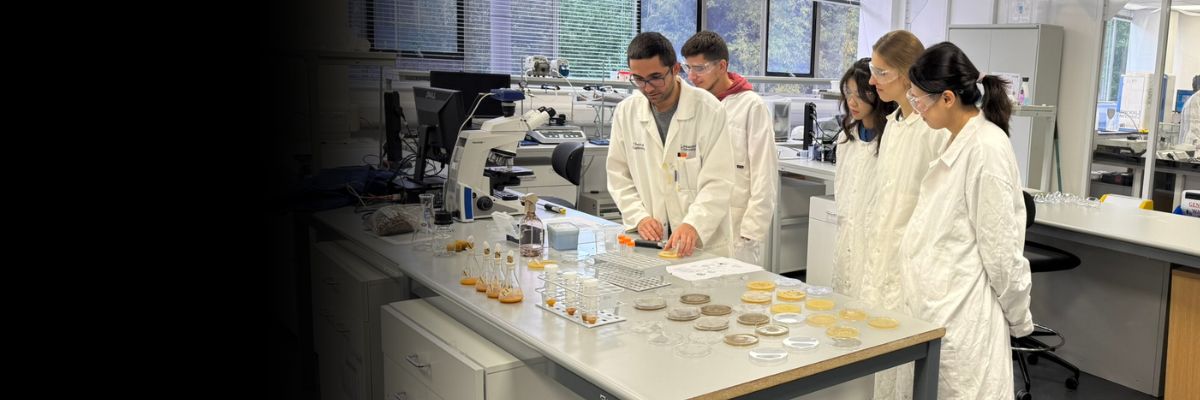
There is an integrated platform under Bio3G group with unique competencies that provide an end-to-end services designed to support the progression of innovation from initial research through to commercialisation. Our purpose-built facilities cater to a diverse range of partners, from early-stage startups to established organisations aiming to offer innovative cutting-edge solutions, optimise, scale, and reduce risks associated with their operations.
We offer a range of integrated solutions in the areas mentioned above, allowing flexible collaboration throughout the entire development lifecycle-from early process development to pilot-scale production and technology assessment. Our team is highly experienced in establishing and maintaining intellectual property of commercial interests. Whether the objective is to establish a new process, scale an engineering product, or evaluate emerging technologies, our experienced team works closely with partners to deliver bespoke, cost-efficient solutions that accelerate time to market.