We welcome applications from the United States of America
We've put together information and resources to guide your application journey as a student from the United States of America.
Overview
Top reasons to study with us
3
3rd for Creative Writing
The Guardian University Guide (2026)
6
6th for Creative Writing
The Complete University Guide (2026)
7
7th for English
The Guardian University Guide (2026)
Explore a vast range of literary works, from ancient myth to the contemporary graphic novel, and study a host of historical movements, from the medieval world to the rise of human rights. Through engagement with texts and artefacts crossing continents and centuries, our interdisciplinary programme will immerse you in both literature and history.
Why Lancaster?
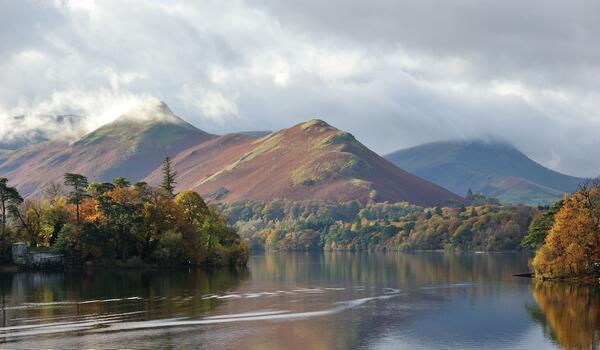
Explore a city steeped in history and with the Lake District, home of the Romantic poets, on its doorstep
Be inspired by our rich programme of free literary and historical events on campus, online, and in the city’s historic Castle Quarter
Benefit from internship opportunities, including residential positions at Wordsworth Grasmere in the heart of the English Lake District and placements with local heritage organisations
Enhance your professional skills by getting involved with our student-run literary journals: Cake, Lux, Flash, and Errant
Address the challenges to our world past, present and future, from environmental change, to war, and conflict and human rights
Be taught by critics, writers and historians with international reputations
Past worlds: world literature
You will engage closely with texts and artefacts crossing continents and centuries, exploring the profound question of where literature ends and history begins. In doing so, you will learn how to understand the worlds of others, both on these shores and far beyond. In your first year, you will be given a broad grounding in both literary and historical analysis. This will help you make informed decisions about the particular literary themes and historical periods that really interest you and, indeed, may lead you to your final-year research project, where you work on a literary and/or historical topic or theme of your own choosing. In Literature, this could be anything from, say, Renaissance sermons to filmic representations of World War One; whilst in History, you could choose, for example, a global phenomenon like the Transatlantic Slave Trade or an episode from Lancaster’s own rich history such as the infamous execution of ten people for witchcraft in 1612.
Literary and historical communities
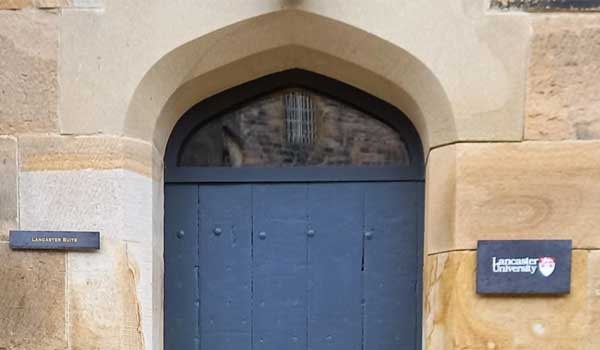
To supplement your studies, we offer an extensive range of literary and/or historical events, some of which take place in the University Suite at Lancaster’s spectacular medieval Priory nearby. These include:
Talks from visiting scholars and well-known authors
Access to our interdisciplinary Research Centres for Regional Heritage, Digital Humanities, and War and Diplomacy
Social events such as our October Evening and May Gathering, both held at the Priory
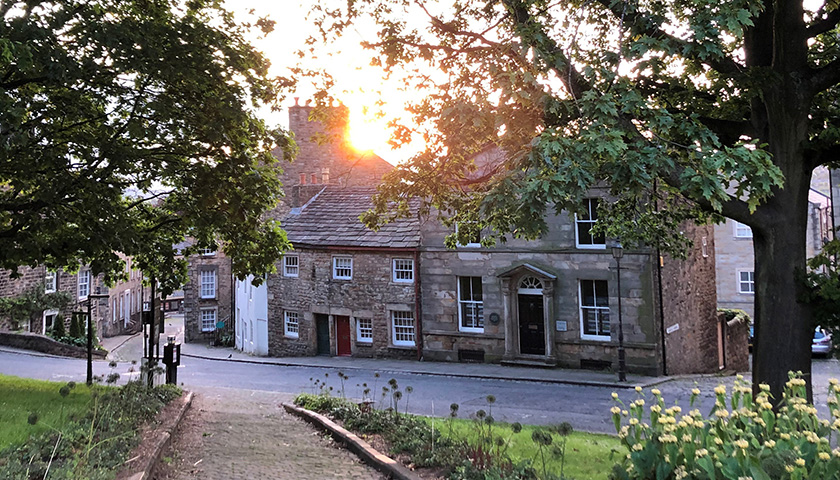
The city of Lancaster and its surrounds – from the Lake District to the Bay coastline and the Forest of Bowland – are steeped in history. From Bronze Age stone circles to Viking-age graves and medieval abbeys, and from Roman forts to memorials of the Transatlantic Slave Trade, the region is rich in the living remains of past cultures for you to explore. Over ten centuries, the Lancaster’s Norman castle has been a fortress, court and prison, now the heart of a vibrant historic city.
To build on your studies, you can discover the latest research by attending our History seminar series, where guest historians from across the UK come to share their insights and discuss their findings. Connect with fellow student historians in the student-led History Society for organised trips and talks.
Lancaster is also well-known for its a rich cultural life, and events such as Lancaster Litfest give you the opportunity to immerse yourself in Literary Lancaster.This is an excellent way to make valuable professional connections and to establish friendships.
Professional development
You will have a range of opportunities to develop real-world skills that will prepare you for your future career. You might, for example, volunteer at Lancaster LitFest or one of the museums, or apply for one our residential internships at Wordsworth Grasmere, or help manage one of our four student-run literary journals (Cake, Flash, Lux and Errant), giving you invaluable experience in writing, publishing, and marketing.
Throughout your degree you will gain the vital professional skills that all employers value, such as clarity of writing, presenting well-researched arguments, and creative and critical thinking.
Discover a wide expanse of genres and time periods, right up to newly published literature. Our students explain what it’s like to study English Literature at Lancaster University, from our close-knit community and small-group teaching, to the accessibility of our friendly teaching staff.
Be part of Literary Lancaster - a vibrant community of critics and writers. Enjoy our rich programme of free literary events both on campus and in the city’s historic Castle Quarter.
We are always looking to support, encourage, and celebrate our students.
Your year abroad
Study abroad
The study abroad option is an exciting opportunity for anyone who is thinking of working abroad during their career or who simply wants the experience of living and studying overseas as part of their degree.
Often study abroad students describe the year abroad as a “transformative experience”, as it can shape your future career path as well as having a positive impact on your personal development.
On a study abroad course, you'll spend two years at Lancaster before going overseas in your third year to study at one of our international partner universities. This will help you to
develop your global outlook
expand your professional network
increase your cultural awareness
develop your personal skills.
You’ll return to Lancaster for your final year of study in year four.
Host universities
During your year abroad, you will choose specialist modules relating to your degree and potentially other modules offered by the host university that are specialisms of that university and country.
The places available at our overseas partners vary every year. In previous years destinations for students in the Faculty have included Australia, USA, Canada, Europe and Asia.
Alternative option
We will make reasonable endeavours to place students at an approved overseas partner university that offers appropriate modules. Occasionally places overseas may not be available for all students who want to study abroad or the place at the partner university may be withdrawn if core modules are unavailable.
If you are not offered a place to study overseas, you will be able to transfer to the equivalent standard 3-year degree scheme and would complete your studies at Lancaster. Lancaster University cannot accept responsibility for any financial aspects of the year abroad.
Careers
Studying English Literature and History at Lancaster will prepare you for a range of careers in traditional fields such as publishing, education, journalism, writing, heritage and the arts, television, and the media. You could go on to work as a librarian or archivist or take further qualifications to enter the legal profession or social work. Graduates of English Literature and History go on to roles as cabinet ministers, government advisors, intelligence operatives and diplomats, and leaders in the armed forces.
Our recent graduates have gone on to become:
Authors
Journalists
Publishers
Teachers
Computer programmers
Game writers
Copywriters
Advertisers
Lawyers
Financiers
The course also lays a strong foundation for further specialisation. Many of our students go on to postgraduate study at Lancaster and elsewhere.
Careers and employability support
Our degrees open up an extremely wide array of career pathways in businesses and organisations, large and small, in the UK and overseas.
We run a paid internship scheme specifically for our arts, humanities and social sciences students, supported by a specialist Employability Team. The team offer individual consultations and tailored application guidance, as well as careers events, development opportunities, and resources.
Whether you have a clear idea of your potential career path or need some help considering the options, our friendly team is on hand.
Lancaster is unique in that every student is eligible to participate in The Lancaster Award which recognises activities such as work experience, community engagement or volunteering and social development. A valuable addition to your CV!
Find out more about Lancaster’s careers events, extensive resources and personal support for Careers and Employability.
Explore Student Futures
Our graduates go on to a diverse range of careers from academics to celebrated poets, screen-writers and novelists. Others go into a host of other careers closely related to literary study, such as teaching, publishing, copywriting and advertising. A degree in literary studies can, though, lead to other, less obvious futures, such as psychotherapy, emerging markets consultancy, data analysis and finance.
Find out about some of the careers our alumni have entered into after graduation.
Entry requirements
These are the typical grades that you will need to study this course. This section will tell you whether you need qualifications in specific subjects, what our English language requirements are, and if there are any extra requirements such as attending an interview or submitting a portfolio.
Qualifications and typical requirements accordion
AAB
36 Level 3 credits at Distinction plus 9 Level 3 credits at Merit
We accept the Advanced Skills Baccalaureate Wales in place of one A level, or equivalent qualification, as long as any subject requirements are met.
DDD
A level at grade B plus BTEC(s) at DD, or A levels at grade AB plus BTEC at D
35 points overall with 16 points from the best 3 HL subjects
We are happy to admit applicants on the basis of five Highers, but where we require a specific subject at A level, we will typically require an Advanced Higher in that subject. If you do not meet the grade requirement through Highers alone, we will consider a combination of Highers and Advanced Highers in separate subjects. Please contact the Admissions team for more information.
Distinction overall
Help from our Admissions team
If you are thinking of applying to Lancaster and you would like to ask us a question, complete our enquiry form and one of the team will get back to you.
Delivered in partnership with INTO Lancaster University, our one-year tailored foundation pathways are designed to improve your subject knowledge and English language skills to the level required by a range of Lancaster University degrees. Visit the INTO Lancaster University website for more details and a list of eligible degrees you can progress onto.
Contextual admissions
Contextual admissions could help you gain a place at university if you have faced additional challenges during your education which might have impacted your results. Visit our contextual admissions page to find out about how this works and whether you could be eligible.
Course structure
We continually review and enhance our curriculum to ensure we are delivering the best possible learning experience, and to make sure that the subject knowledge and transferable skills you develop will prepare you for your future. The University will make every reasonable effort to offer programmes and modules as advertised. In some cases, changes may be necessary and may result in new modules or some modules and combinations being unavailable, for example as a result of student feedback, timetabling, Professional Statutory and Regulatory Bodies' (PSRB) requirements, staff changes and new research. Not all optional modules are available every year.
Tracing the evolution of literature over time and in time, you will engage with an array of literary genres including plays, films, short stories, novels, poetry, essays and the graphic novel. You will encounter a wide range of literature - from the Middle Ages to the 21st Century, moving from Chaucer, through Shakespeare and Milton, to Virginia Woolf. You’ll also study contemporary writers such as Alison Bechdel and Paul Muldoon, and many others.
We begin your historical training with the cornerstone of historical research: evidence. What counts as evidence? It comes in many forms:
Chronicles and law codes
Letters and diaries written by people in the past
Visual records, from paintings to photographs, film and maps
Aural records such as music and oral histories
The physical remnants of past worlds, from coins to castles and burial places
Each source has a context we need to uncover. Who produced the source and why? Who would have seen or heard it and what was their reaction? From here we can learn what questions to ask of our evidence. How can it illuminate past worlds?
Our expert historians guide you through hands-on training, building your skills in drawing value from historical evidence.
Why do historians disagree about how to interpret the past? What issues divide them and why do they disagree? Continue your training as a first-year historian and study real-life examples of historical debate introduced by our experts.
If the cornerstone of historical research is handling evidence, why do historians place different values on certain evidence or interpret evidence differently—or miss evidence all together—and how do they build their arguments to come to alternative conclusions?
You’ll develop skills in reading historical arguments, uncovering how historians select and present evidence and engage critically with fellow scholars and how they craft their argument. In the process, you’ll learn from examples how to build an argument to engage, inform and persuade, forging the essential skills of the historian.
Optional
optional modules accordion
The medieval and early modern periods witnessed immense change. This module will introduce you to the key themes, sources, and methods you need to understand the patterns of change and continuity around the world over a period of more than a thousand years. The shift from a warm climate in the medieval period to a colder one in the early modern period may help us explain patterns of life in a world where most people depended on subsistence agriculture.
Huge transformations were also wrought by the movement of people, diseases, animals, and goods, with events such as the Black Death in Europe and smallpox epidemics in the Americas decisively changing how people lived, and how they related to each other. At the same time, political and religious ideas can help us to understand how and why people organised their societies in the ways they did, and how they understood their relationships to the other societies around them.
To reckon with these changes - and many more - you will study a wide range of themes, from environment to health and disease, gender, culture, media, politics, religion, and science. Meanwhile, you will master some of the key approaches and methodologies that historians now use to interpret the fascinating patterns of continuity and change in early modern life. Moreover, discover a wealth of primary sources, ranging from: chronicles and letters; poetry and literature; codes of law; burials and material culture; along with printed pamphlets, books, and newspapers.
Learn how to analyse highly contemporary political events and trends, and develop the vital critical skills required to be able to put them into context. You will also discover how to relate these issues to core empirical questions and debates within academic research on politics. Taking a problem-based learning approach, you’ll use evidence to evaluate competing explanations for recent political developments.
These may include:
Democracy and elections
Political leadership
The state and globalisation
Structural inequalities
Political institutions
Public opinion and protest.
Lancaster’s politics experts have extensive expertise across different regions of the globe and we are quick to respond to contemporary global political trends. This means you will be able to directly connect current political events and your own political interests. You will learn to critically reflect on the different types of empirical evidence political experts use to study politics, including polling, rhetoric, discourse and case studies.
Explore the complex landscape of global governance and the role of international institutions in addressing contemporary challenges. You will begin by studying the historical development of the international system and the evolution of world order, setting the stage for an analysis of key actors in global politics.
You’ll learn about:
The functions and impact of states
International organizations
Non-governmental organizations
Multinational corporations
Transnational non-state actors
Examining the processes of global governance, including diplomacy and negotiation, you will analyse the economic, social and cultural dimensions of globalization and their impact on state sovereignty, international cooperation and global inequality.
Through the use of case studies, you will critically evaluate these interactions and how they attempt to address pressing global issues. You’ll assess the effectiveness, legitimacy, and limitations of international cooperation in a globalized world.
This module explores the role of the arts in building community, identity and confidence. You will engage with a variety of different art forms (such as painting, theatre, fiction, designed artefacts and film) and develop your own voice via collaborative projects such as a podcasts, video essay or presentation. You will also engage in individual critical reflection for example via a blog, journal or research project.
This module fosters co-operation, intellectual experimentation and self-assurance.
What does it mean to think in and about the world? This module will draw on disciplines from across the School of Global Affairs to think about the very different ways in which the world can be imagined.
What are the ideas that have framed or limited our understanding of the world and others in it? How can we challenge existing narratives and explore alternative perspectives?
Look beyond the boundaries of traditional courses in English Literature and explore a wide and exciting range of literatures in English and translation from antiquity to the present day. Discover texts that have influenced the development of literary English, from the Bible and classical figures such as Ovid and Homer, through Medieval and Early Modern authors such as Dante and Rabelais to contemporary world authors in translation such as Kafka and Rushdie.
This module explores the lived experience of peoples and nations in the modern age through the emergence of new ideas – including nationalism, capitalism, imperialism, racism, feminism - and, in turn, how those ideas were shaped by individuals, political movements, and events in diverse regions such as Europe, Asia, Africa, and the Americas.
You will explore the dramatic changes that took place across the period, such as enslavement and emancipation, dictatorship and democracy, mass suffrage, war, persecution, and transformations in medical practice and legal systems, including the emergence of the idea of the citizen.
You’ll also consider the histories of those who defied and resisted these ideas, regimes and categorisations in the face of industrial, economic and decolonial transformations. Here you will gain an understanding of how individual and group identities have been forged and contested against a backdrop of turbulent social forces in the modern world.
Core
core modules accordion
Explore literary criticism as it is now and what it may yet become. You will have the opportunity to consider a whole range of major theoretical and philosophical concepts, such as:
The body
Race
Gender
Violence
Ecology
God
Time
Death
War
Self
The animal
You will study a range of fascinating modern thinkers, ranging from Marx, Freud and Nietzsche, through to more recent figures such as Simone Weil, Walter Benjamin, Jacques Derrida, Judith Butler, Fred Moten, Cornel West and Sara Ahmed.
Who makes History? What drives them to investigate the past? You’ll meet the women and men who have helped shape the discipline of History, delving into their life and works. How did their experiences and opportunities shape their careers and what questions spurred their curiosity? How did they find the sources they would need, and what methods did they use to analyse them?
In exploring their stories, you’ll ask how the place, time and society in which they lived opened opportunities or created obstacles to their careers, how they collaborated with other scholars or carved roles in learned societies or public debate. And you’ll ask why some historians have been heralded as ‘great’ – their names famous, their books widely read – and why others are consigned to the footnotes of the historical profession, their endeavours in the archives unrecognised. What makes a pioneering historian?
Optional
optional modules accordion
Explore a wide range of literature and drama from the medieval and early modern periods. The module situates medieval and early modern literature in its relevant historical and cultural contexts.
You will develop skills in the close reading of medieval and early modern texts.
Authors studied may include Chaucer, the Gawain poet, Margery Kempe, Mary Wroth, Sir Philip Sidney and Christopher Marlowe.
Exploring the adaption of literature to film and other media, this module focuses on the adaptation of literary texts to such forms as theatre, graphic novel, film, television, song, and game.
You will be invited to reflect on adaptation as a powerful and complex cultural process, one that interprets literature as well as adapts it.
Throughout the module you will normally complete either a critical essay on adaptation OR a creative project (plus short essay) that enables you to produce your own work of adaptation. This may take many forms -- written, (audio) visual, musical, digital, or three-dimensional and/or take the form of a game, production or performance, etc.
Examine some of the ways in which literature has explored and expressed the complexity of belief and doubt, redemption and apocalypse, damnation and revelation. You will consider the ways in which moments, motifs and ideas indebted to the sacred can be found within a wide range of texts.
Although welcoming consideration of all three Abrahamic faiths, we will focus primarily on Christian traditions and texts.
Authors studied may include:
Julian of Norwich
Gerard Manley Hopkins
Oscar Wilde
G. K. Chesterton
James Baldwin
Margaret Atwood
Toni Morrison
Discover how wars are among the most important drivers of historical change. They have transformed states, societies, borders and landscapes, as well as ideas, identities, and worldviews.
The decision to go to war is rarely taken lightly, but the mechanisms and norms for doing so have varied greatly over time. How peoples mobilize themselves for conflict has likewise been shaped by ideas about rights, responsibilities, and roles, ideas sometimes rooted in shifting concepts of gender and racial ideologies.
War is also a crucible of scientific and technological change. From the longbow to the machine gun, and from photography and reconstructive surgery to the atomic bomb, war has stimulated scientific and technological innovation while unleashing its most destructive forces.
By exploring war and its legacies in all its complexities, you’ll see it not as a unique form of human endeavour, but as a realisation of broader social, cultural, and intellectual forces.
Explore the links between humans and their environments around the world from the medieval period to the modern era. Examine how people have understood nature and their place within it over time and across cultures, investigating climate change, environmental disasters and massive landscape transformations.
You’ll situate the natural world as both an agent of change and a system that humans can alter on many scales, developing skills in navigating complex human-environment interactions. You will encounter a range of sources, from texts to images and environmental data, and learn how to analyse them, including through digital methods.
With these skills, you’ll explore regional case studies of environmental impacts on humans and human alterations of the environment, from the impact of warming periods and the Little Ice Age to the transformation of colonial landscapes, the exploitation of forests, minerals, and water and the effects of urbanization.
What we call ‘American Literature’ and how we define America and ‘the American experience’ depends on who is writing and to whom. In this module you will encounter many different voices, many conflicting and contrasting views, a diversity of complex experience and a great range of writing in form and style.
You will explore such questions as: What role do different literary forms play in narrating the self? How does American writing seek to establish a new way of looking at the world? And how and why does literature help shape forms of protest and new critiques of modernity?
The years of Queen Victoria’s reign (1837-1901) saw great social, political and cultural transformation. Changing social conditions, extraordinary scientific breakthroughs and the emergence of new technologies all altered the ways in which Victorians thought about themselves and their environment. The literature of the period responded resourcefully to the turbulent circumstances from which it emerged.
In this module, you will examine a wide range of Victorian writing, including novels, short fiction, poetry, drama and non-fictional prose and will explore and interrogate all the complexities of the Victorian age.
Explore the two things that make us human – body and mind. Historians once regarded mind and body as the same across time and place. But more recently, historians have challenged this assumption, showing that changing societies have led people to experience mind and body in radically different ways.
You will explore patterns of continuity and change from the medieval to modern periods by investigating key themes such as:
How ideas about mind and body have impacted gender, race and social class
Violence and injury
Sexuality and gender identity
Changing experiences of disability and transformations in attitudes to healthcare
You’ll build the skills to historicise mind and body through innovative methodologies such as:
Disability studies
Histories of health and medical humanities
Gender and sexuality studies
Histories of clothing and bodily adornment
Interdisciplinary approaches including osteoarchaeology
Recent developments in material culture
The study of lived experience
What does it mean to die? Is it frightening? Will I see those I love again? What does it mean to kill, whether an enemy, a friend, or myself? Death is a universal human experience but, as you’ll discover, how we confront it has varied across history.You’ll explore varied experiences of death, from end-of-life care to execution, and from battlefields to pandemics.
Religion can shape beliefs and customs, from the theology of the afterlife to funerary rituals and the treatment of the corpse. Yet at the margins have always lain a shadowy world, where the restless dead return, the living seek to summon the departed, and the despairing take their lives.
You’ll discover the different means of investigating death, from the chronicles that describe the walking dead, to the archaeology of burial practice, and from murder trials to palaeogenetics, unlocking the passage of disease.
Reflect on what it means to do criticism in a post-theoretical age. This module asks what happens to literary interpretation after all its many theoretical upheavals – from Marxism and feminism to postcolonialism and queer theory. Is it time to get back to the close reading of literature? Is there still room for pleasure, appreciation and creativity in the practice of criticism? We might question whether literature, in the traditional sense, even exists anymore.
You will pose these questions in relation to a range of traditional and non-traditional texts.
How do people share ideas? Who controls information? What technologies make communication around the world possible? From medieval to modern history, knowledge and ideas have been written, printed, hidden, copied, gossiped about, archived, and destroyed.
You’ll examine cultures of information and misinformation around the world. Circuits of information have been cultivated in state and religious institutions, social networks, mass media, and, more recently, the internet. From espionage to scandals and fake news, you’ll ask who is shaping information, with what tools or media, and with what political, ethical, social, and economic motivations and consequences.
You’ll study how ideas are transmitted, for example in songs, slave networks, books, laws, maps, advertisements, newspapers, and letters. You’ll build critical skills in assessing provenance and context of information, past and present, preserved and lost, digital and analogue, true and false.
You are invited to collaborate in an interdisciplinary team with other students as you explore major global challenges such as climate change, inequality or emerging technologies.
Throughout the module you will examine how the humanities, arts and social sciences contribute to understanding and addressing complex issues. Classroom discussions and activities focus on the process of identifying problems and considering innovative, ethical responses, while helping you to consider and articulate the relevance of this work to your personal and professional development.
Explore how ideas can be developed into real-world projects with lasting value. Through hands-on collaboration and problem-solving, you will develop innovative projects, learn how to bring ideas to life and explore ways to sustain them.
Whether you are working in a team or individually, you will be encouraged to experiment with different approaches to making a difference in artistic, cultural, social and community spaces.
Core
core modules accordion
In your third year you will study at one of our international partner universities. This will help you to expand your global outlook and professional network, as well as developing your cultural and personal skills. It is also an opportunity to gain a different perspective on your subject through studying it in another country.
You will choose specialist modules relating to your degree and potentially modules from other subjects offered by the host university that are specific to that university and country.
The availability of places at overseas partners varies each year. In previous years destinations for students in the Faculty of Humanities, Arts and Social Sciences have included Australia, USA, Canada, Europe and Asia.
Core
core modules accordion
Why does History matter? What does it contribute to our world? Challenge yourself to consider how our discipline is applied.
Beyond working in universities, historians are active in public debate and influence the policies of institutions and governments on matters from the memorialisation of historic figures and institutional links with the Transatlantic Slave Trade to geopolitical threats to UK security. They collaborate with museums, helping visitors engage with material remains of the past, and write books for a wide public readership.
You’ll develop a critical awareness of your discipline and gain confidence in articulating its significance in our world. You’ll also contend with the subjective use of History: how political leaders have co-opted stories of the past to justify war and conquest, and ideologically driven groups claim historical legitimacy. What role should historians play in shaping how our understanding of the past influences the present?
Optional
optional modules accordion
What is the contemporary? When did the present cultural moment start and how might it end. How do?writers?respond to the challenge, excitement,?pressure?and novelty of the ‘now’??And how is imaginative writing faring in the digital age?
You will consider these questions in relation to the work of such major authors as Ali Smith, Kazuo?Ishiguro?and Colson Whitehead.
Study key texts and contexts from a short but remarkably intense period of literary history. Encompassing the work of writers such as Wordsworth, Blake, Keats and Shelley, you will explore the role of nature, the imagination and the sublime. You will also consider the emergence of the Gothic tradition and examine the interactions between literary and politics in a turbulent era of revolution and change.
Examining a wide range of texts and authors from early periods to the age of the climate crisis, this module will explore the many and various ways in which the non-human world is celebrated, championed and exploited by the literary imagination.
You will explore questions such as:
What do we mean by the ‘the environment’?
What experiences, meanings and values do we take from, or discover in our surroundings?
How have writers characterised the environment and in what ways might the literary imagination be significant for contemporary environmental concerns?
What is critical theory? Why is it one of the most controversial areas of contemporary culture today? And to what extent do theoretical ideas about power, race, gender and identity change the way we think about the world?
On this module you will explore a range of classic and contemporary themes, trends and topics in critical theory from the 1960s to the present. You’ll take a deep dive into key thinkers like Foucault, Deleuze and Agamben and key concepts like biopolitics, globalisation and animal studies.
The thirteenth century brought rebellion against a tyrant, then a revolution: a party seized power from the king to govern England. This period is hailed as the foundation of democracy – but the reality is darker. Religious leaders were empowered to punish kings, rebels fought as crusaders, and people killed and died for a political cause.
You’ll explore events including the making of Magna Carta, the 1258 coup, and the Battle of Evesham that ended England's First Revolution. You’ll meet queens like Eleanor of Provence, leading knight William Marshal, and Pope Innocent III; tyrannical and hapless kings; Simon de Montfort, the revolution's leader; and the low-born people who flocked to his banner.
You’ll investigate their stories through letters, testimonies, and eye-witness accounts, and challenge historical interpretations of this era. What moves women and men, poor and rich, to risk their livelihoods, take life and give their own to decide who rules?
Today the claim that God designed everything in the universe has given way to the theory of evolution. The usual story of this change is one of conflict between science and religion. But we will challenge the popular narrative.
You will reconsider the rise and fall of the idea that nature was the work of a divine designer, focusing on the period 1450-1800. As well as trying to understand why the design argument became so important in the early modern period, you will seek to understand why it fell out of favour during the 18th century - long before the theory of evolution. But you will not simply be studying the history of ideas. To understand how early modern science changed, you will study a wide range of practices - from intellectual disciplines like philosophy, rhetoric and theology, to material practices including chemistry, architectural design, archaeology, and art.
The English East India Company (founded 1600) was the most famous corporation in world history: its business connecting the British Isles across the Atlantic, Indian, and Pacific Oceans. It was a protagonist of globalisation.
In this module you’ll discover how historians have debated what the Company represented. It did much to stimulate global trade, but was it a private business in the modern sense? It ruled British territory on behalf of the British state, but was it a state in its own right?
You will gain a broad and systematic understanding of seventeenth-, eighteenth-, and nineteenth-century British, Indian, and global history; and develop expertise in and experience of deploying established techniques of analysis: from cultural, art, political, parliamentary, global, economic, constitutional, gender, and business history. Making use of primary and secondary sources, you will be challenged to digest and critique the latest research in this area.
Examine how cogent issues in crime, justice and punishment have been treated historically from the eighteenth century. Taking advantage of online historical datasets, including Digital Panopticon and Old Bailey Online, you will be introduced to the vast range of historic criminal justice records.
On the module, the classroom becomes the archive. You’ll get hands on with primary sources evidencing the social and cultural history of modern Britain, and act as Digital Detectives to gather evidence to unlock the world of Victorian crime and punishment.
By using digital approaches to this evidence, you will be able to navigate a history from below and explore the impact of crime and injustice on diverse social groups including women, the working classes, migrants and youth. You’ll explore historical experiences of crime, justice and punishment both at scale and at the level of the individual in its fullest evidential context.
Explore the history of South Asia from the abolition of sati to the death of India’s first Prime Minister, Jawaharlal Nehru. You will consider the social, cultural and political histories through which the idea of India was expressed and contested.
You will examine the debates and rebellions through which the European colonial project was resisted and South Asian identities were expressed and cohered. You’ll begin by considering how, in the nineteenth century, the translations, interpretations and classifications of subcontinental history, society and language were created.
How were ideas of identity, community and freedom formed in response to and against the incursion of European power in the region? Subsequently, how did the idea of the nation coalesce into something beyond Empire to create not one, but two nations: India and Pakistan?
With the blurring of the Home and Battle Fronts in Britain in the Second World War, the conventional wartime gender contract — in which men fight to protect the vulnerable at home and women keep the home fires burning — was challenged. In this module you will examine how war was experienced by those who conformed to and those who challenged gender norms, by those included in the war effort and those who stood outside it.
You’ll consider different categorisations of experience (military/civilian; home front/ battle front; male/female) and how historians have grappled with key concepts including the People’s War and hierarchies of service. Through a wide range of primary sources, including autobiographical materials, poems, photographs, films, parliamentary minutes, newspapers, posters and cartoons, you will seek to understand individual and collective experiences of the war and their gendered dimensions.
Soviet history is often told through the prism of totalitarian oppression, but beneath layers of state control a vibrant dissident movement was active. In this module, you will explore the breadth, depth and complexity of the Soviet dissident movement and critically analyse the impact that they had on the wider world.
You will explore the nature of political life in the Soviet Union, ranging from the labour camps under Joseph Stalin, to the use and abuse of psychiatry under Nikita Khrushchev and the silencing of dissidents under Leonid Brezhnev. You’ll also consider the role dissidents played in the collapse of the Soviet regime and the position of dissidents in contemporary Russia.
By focusing on political dissidents in the Soviet system, you will critically assess how totalitarian governments function, how opposition movements operate and how the international community responds to this persecution.
The final-year Dissertation is your opportunity to devise, research and explore a topic of your own choice through a programme of directed independent study. You will be helped to begin your thinking at the end of your second year and then, through your final year, you will develop your research, thinking and writing, as you build toward a substantial, self-directed project.
Almost anything is possible; for example, you could choose to explore famous literary names or themes, or research obscure figures and unusual topics. You might draw on the University Library’s special collections, or venture way beyond Lancaster to develop your research. Perhaps you will be inspired by the medievalism of historic Lancaster or the Romanticism of nearby Lake District or be drawn to the far textual shores of the digital world.
You can focus your work towards a professional career or build towards postgraduate study at master’s level. Finally, you can opt to write in classic literary critical styles or push the boundaries of literary study in new and startling ways.
Study the work of four giants of nineteenth-century British fiction: Jane Austen, Anne Brontë, Charlotte Brontë and Emily Brontë.
Focusing on questions of class, gender, power, environment and artistic technique, you will explore the tensions between Austen and the Brontes (south vs north, Regency vs Victorian, realism vs Gothic) and trace the imaginative continuities between them.
Both the Gothic and science fiction emerged in response to the 18th century ‘age of reason’ and the Western world’s investment in logic and progress. The Gothic explores the terrors of the past and its return while science fiction imagines alternative futures; in doing so, both voice the concerns of the present.
You will study both classic literary texts and contemporary film and other media. Exploring what the Gothic and science fiction each do, rather than what they each are, you will consider how these genres address some of the most pressing questions facing contemporary Western culture.
Ben Jonson claimed of Shakespeare ‘he was not of an age but for all time.’ This module, however, examines Shakespearean drama and poetry in its own time and as a platform in which early modern debates about agency and government, family and national identity, were put into play. The stage was and is a place in which questions of gender, class and race, gain immediacy through the bodies and voices of actors.
By examining texts from across Shakespeare’s career, you will explore their power to shape thoughts and feelings in both their own age and in ours. You will consider how, in the past and in the present, Shakespeare’s texts exploit the emotional and political possibilities of poetry and drama.
The assessment of this module normally concludes with either an essay OR a creative engagement (e.g. reading, performance, artwork) plus critical reflection.
The early 20th century explosion of literary experimentation known as Modernism was a movement informed by the catastrophe of the First World War, the convulsion that was the Russian Revolution and a host of dramatic developments in art, music, cinema, philosophy, theology, politics and science.
Alongside reading the literature of the time you will also consider various related artistic movements such as Dadaism, Surrealism and Vorticism. Authors covered typically include T. S. Eliot, Virginia Woolf, Jean Rhys and W. B. Yeats.
Fees and funding
We set our fees on an annual basis and the 2027/28
entry fees have not yet been set.
You will be able to borrow many books free of charge from the university library, however most students prefer to buy their own copies of at least some of the texts. Costs vary depending on whether these are bought new or second hand.
There may be extra costs related to your course for items such as books, stationery, printing, photocopying, binding and general subsistence on trips and visits. Following graduation, you may need to pay a subscription to a professional body for some chosen careers.
Specific additional costs for studying at Lancaster are listed below.
College fees
Lancaster is proud to be one of only a handful of UK universities to have a collegiate system. Every student belongs to a college, and all students pay a small college membership fee which supports the running of college events and activities. Students on some distance-learning courses are not liable to pay a college fee.
For students starting in 2026, the one-time fee for undergraduates and postgraduate research students is £40. For postgraduate taught students, the one-time fee is £15.
Computer equipment and internet access
To support your studies, you will also require access to a computer, along with reliable internet access. You will be able to access a range of software and services from a Windows, Mac, Chromebook or Linux device. For certain degree programmes, you may need a specific device, or we may provide you with a laptop and appropriate software - details of which will be available on relevant programme pages. A dedicated IT support helpdesk is available in the event of any problems.
The University provides limited financial support to assist students who do not have the required IT equipment or broadband support in place.
Study abroad courses
In addition to travel and accommodation costs, while you are studying abroad, you will need to have a passport and, depending on the country, there may be other costs such as travel documents (e.g. visa or work permit) and any tests and vaccines that are required at the time of travel. Some countries may require proof of funds.
Placement and industry year courses
In addition to possible commuting costs during your placement, you may need to buy clothing that is suitable for your workplace and you may have accommodation costs. Depending on the employer and your job, you may have other costs such as copies of personal documents required by your employer for example.
The fee that you pay will depend on whether you are considered to be a home or international student. Read more about how we assign your fee status.
Home fees are subject to annual review, and are liable to rise each year in line with UK government policy. International fees (including EU) are reviewed annually and are not fixed for the duration of your studies. Read more about fees in subsequent years.
We will charge tuition fees to Home undergraduate students on full-year study abroad/work placements in line with the maximum amounts permitted by the Department for Education. The current maximum levels are:
Students studying abroad for a year: 15% of the standard tuition fee
Students taking a work placement for a year: 20% of the standard tuition fee
International students on full-year study abroad/work placements will also be charged in line with the maximum amounts permitted by the Department for Education. The current maximum levels are:
Students studying abroad for a year: 15% of the standard international tuition fee during the Study Abroad year
Students taking a work placement for a year: 20% of the standard international tuition fee during the Placement year
Please note that the maximum levels chargeable in future years may be subject to changes in Government policy.
Scholarships and bursaries
You will be automatically considered for our main scholarships and bursaries when you apply, so there's nothing extra that you need to do.
You may be eligible for the following funding opportunities, depending on your fee status:
Unfortunately no scholarships and bursaries match your selection, but there are more listed on scholarships and bursaries page.
Scheme
Based on
Amount
Based on {{item.eligibility_basis}}
Amount {{item.amount}}
We also have other, more specialised scholarships and bursaries - such as those for students from specific countries.
The information on this site relates primarily to the stated entry year and every effort has been taken to ensure the information is correct at the time of publication.
The University will use all reasonable effort to deliver the courses as described, but the University reserves the right to make changes to advertised courses. In exceptional circumstances that are beyond the University’s reasonable control (Force Majeure Events), we may need to amend the programmes and provision advertised. In this event, the University will take reasonable steps to minimise the disruption to your studies. If a course is withdrawn or if there are any fundamental changes to your course, we will give you reasonable notice and you will be entitled to request that you are considered for an alternative course or withdraw your application. You are advised to revisit our website for up-to-date course information before you submit your application.
More information on limits to the University’s liability can be found in our legal information.
Our Students’ Charter
We believe in the importance of a strong and productive partnership between our students and staff. In order to ensure your time at Lancaster is a positive experience we have worked with the Students’ Union to articulate this relationship and the standards to which the University and its students aspire. Find out more about our Charter and student policies.
Open days and campus tours
Visit campus and put yourself in the picture at an open day or campus tour.
Take five minutes and we'll show you what our Top 10 UK university has to offer, from beautiful green campus to colleges, teaching and sports facilities.
Most first-year undergraduate students choose to live on campus, where you’ll find award-winning accommodation to suit different preferences and budgets.
Our historic city is student-friendly and home to a diverse and welcoming community. Beyond the city you'll find a stunning coastline and the world-famous English Lake District.